
Total Hip Replacement
- Home
- Services
- Total Hip Replacement
What is Total Hip Replacement Surgery?
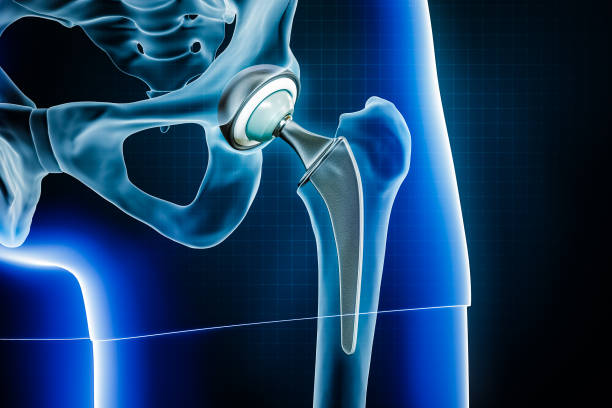
Total Hip Replacement (THR) is a life-changing surgical procedure designed to replace a damaged or diseased hip joint with a durable, artificial implant. It is a proven solution for individuals suffering from debilitating hip pain caused by conditions like osteoarthritis, rheumatoid arthritis, avascular necrosis, or post-traumatic arthritis.This procedure not only relieves chronic pain but also restores mobility and enables you to return to an active, pain-free lifestyle.
Why Do You Need Total Hip Replacement?
The hip joint is one of the largest and most important joints in the body, allowing for a wide range of movement. When the hip joint becomes damaged due to injury or disease, it can severely limit your mobility and cause persistent pain, making it difficult to carry out daily activities such as walking, climbing stairs, or even sitting comfortably. THR surgery is typically recommended when
Conservative treatments fail
Medications, physical therapy, and other non-surgical treatments no longer provide adequate relief.
Chronic pain limits activity
Pain prevents you from enjoying an active lifestyle or performing routine activities.
Joint damage is severe
Conditions like osteoarthritis or rheumatoid arthritis have caused significant wear and tear to the cartilage, leading to joint stiffness and discomfort.
Hip fractures or deformities
Traumatic injuries or congenital abnormalities have caused irreparable damage to the joint.
Who Needs Total Hip Replacement Surgery?
You may be a candidate for THR if you:
- Suffer from constant hip pain that persists during rest or sleep.
- Have difficulty performing routine tasks such as walking, bending, or getting out of a chair.
- Experience limited hip motion or stiffness.
- Have tried medications, physical therapy, and other non-surgical treatments without success.
- Have significant joint damage or deformity detected in X-rays or MRI scans.
Common Conditions Leading to Hip Replacement:
Osteoarthritis (OA)
A degenerative joint disease where the cartilage in the hip joint wears down over time, causing pain, swelling, and stiffness.
Rheumatoid Arthritis (RA):
An autoimmune disorder that leads to inflammation and joint damage, affecting the cartilage and bones.
Hip Dysplasia
A congenital condition where the hip socket is shallow, causing instability and premature wear of the joint.
Hip Fractures
Broken bones due to a fall or accident, which may be beyond repair through conservative methods.
Avascular Necrosis (AVN)
A condition where blood flow to the hip joint is disrupted, leading to the death of bone tissue and eventual collapse of the joint.
Common Conditions Leading to Hip Replacement:
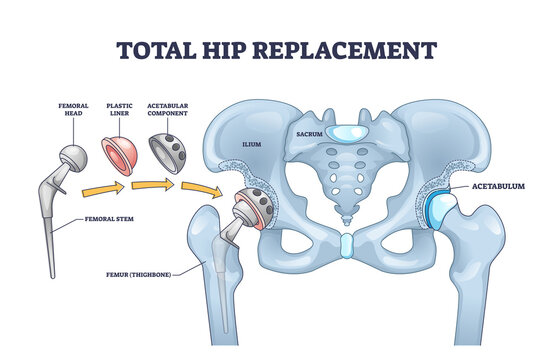
The materials and designs of hip implants have advanced significantly over the years. The key components of a hip implant are
- Femoral Component (Ball): Usually made of metal (such as titanium or cobalt-chrome), ceramic, or a combination of both.
- Acetabular Component (Socket): Typically made of high-grade polyethylene, ceramic, or metal.
- Bearing Surface: The interface between the femoral ball and the acetabular socket. Modern materials like ceramic-on-ceramic or metal-on-metal are used to reduce wear and improve longevity.